
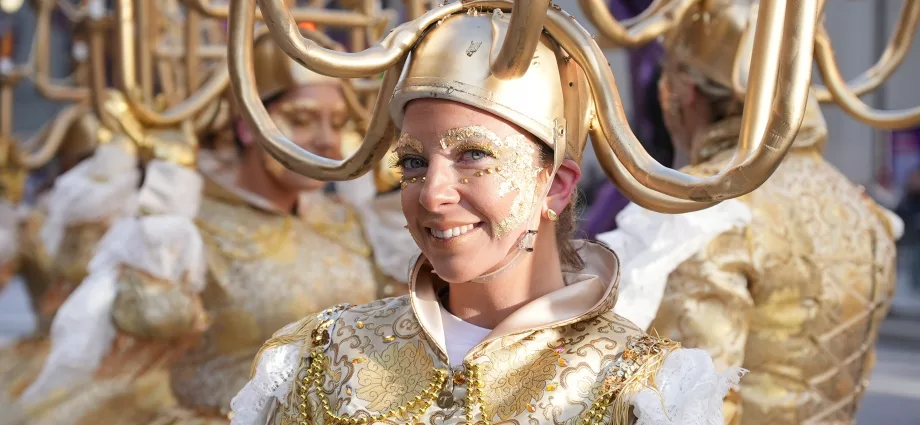
Despite bitter cold and gusty winds that forced an unprecedented suspension of the String Band competition, the 125th annual Mummers Parade marched on along Broad Street today, drawing thousands of bundled-up spectators for America’s oldest folk parade.
The day began with challenges as sustained winds around 30 mph wreaked havoc during early morning setup. Props and sets were damaged or destroyed, and reports indicate at least five participants sustained injuries from flying debris, with some requiring hospital treatment.
“It’s the first time in 125 years we’ve had to make this call,” said Sam Regalbuto, president of the Philadelphia String Band Association. “We did everything precaution-wise — sandbags and all of that — but the winds just ripped things out of our hands. Safety has to come first.”
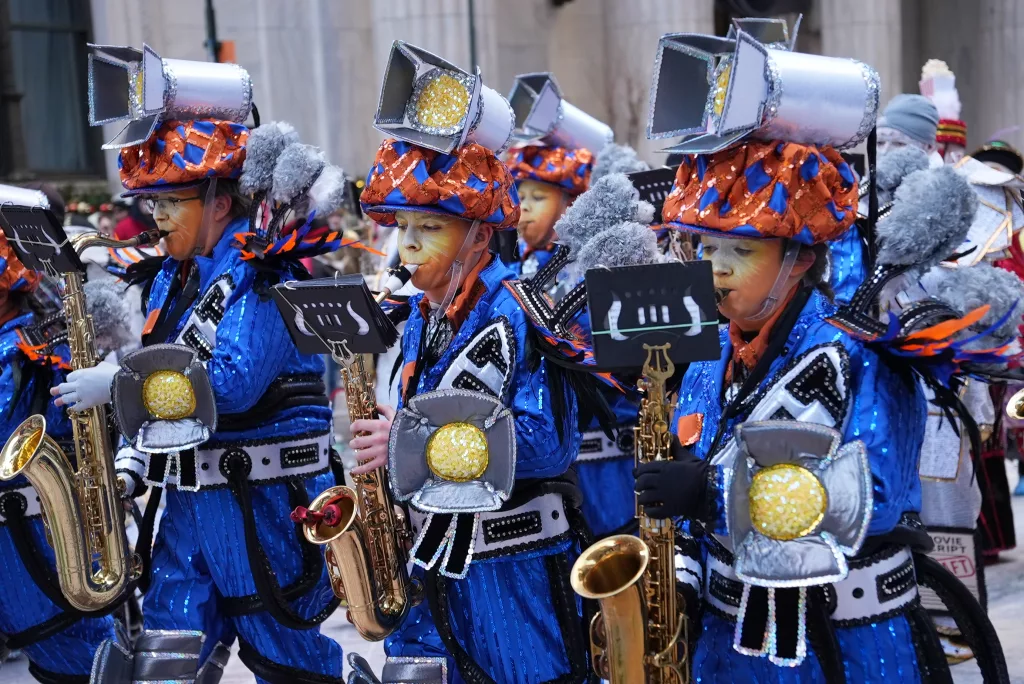
Organizers announced the String Band division’s judged competition would be “suspended until further notice” and rescheduled for a later date. The 14 string bands proceeded without their elaborate props, performing in full colorful costumes, makeup, and with their signature brass and banjo music — delivering what many called a “bare-bones but spirited” show.
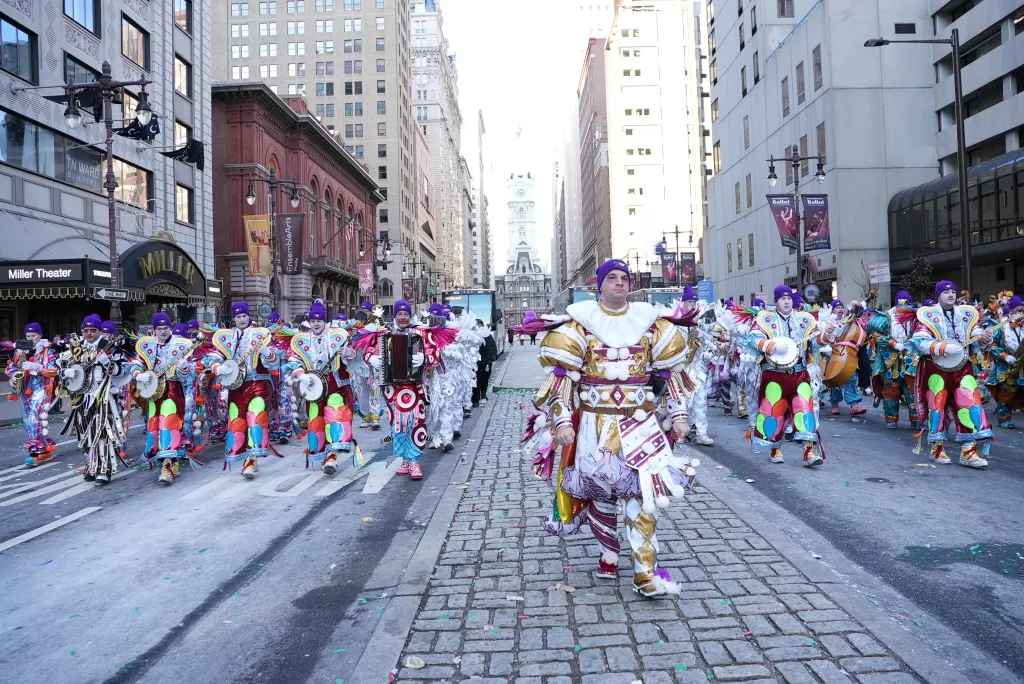
The rest of the parade including the Comics, Wench Brigades, Fancies, and Fancy Brigades went ahead as planned, filling the route from City Hall to Washington Avenue with sequins, feathers, satire, and music. The Fancy Brigades, known for their massive indoor-style productions, brought particular dazzle to the chilly streets.
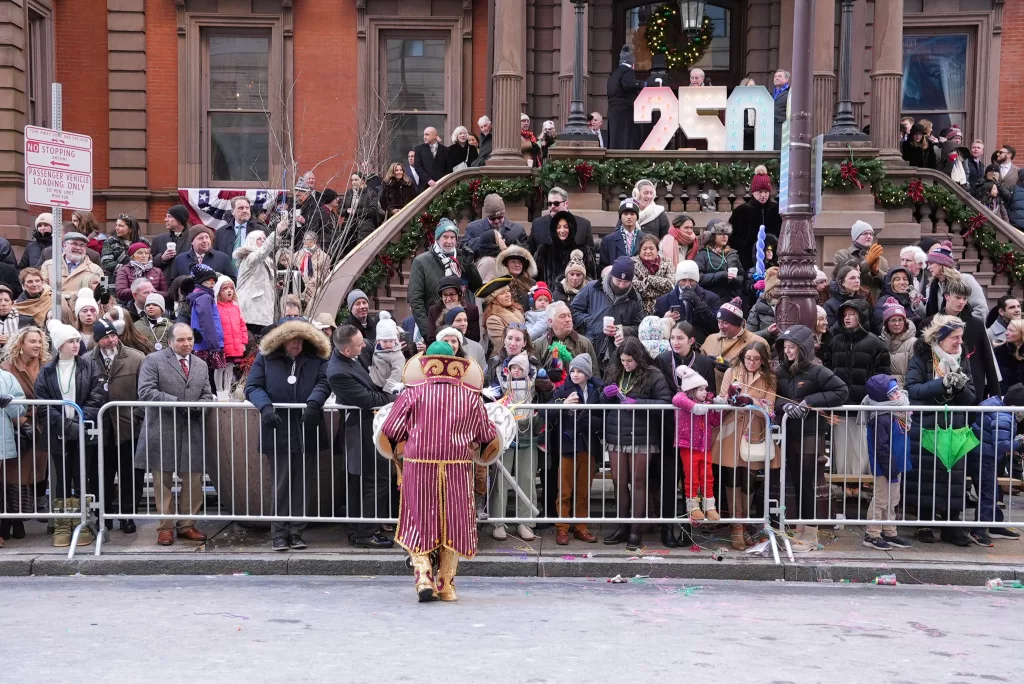
Temperatures hovered in the low 30s Fahrenheit with wind chills dropping into the teens, but that didn’t deter crowds. Families layered in coats and blankets lined the route, some arriving before dawn to claim spots. “It’s cold, but this is Philly on New Year’s Day,” one spectator told reporters. “The Mummers always bring the energy.”
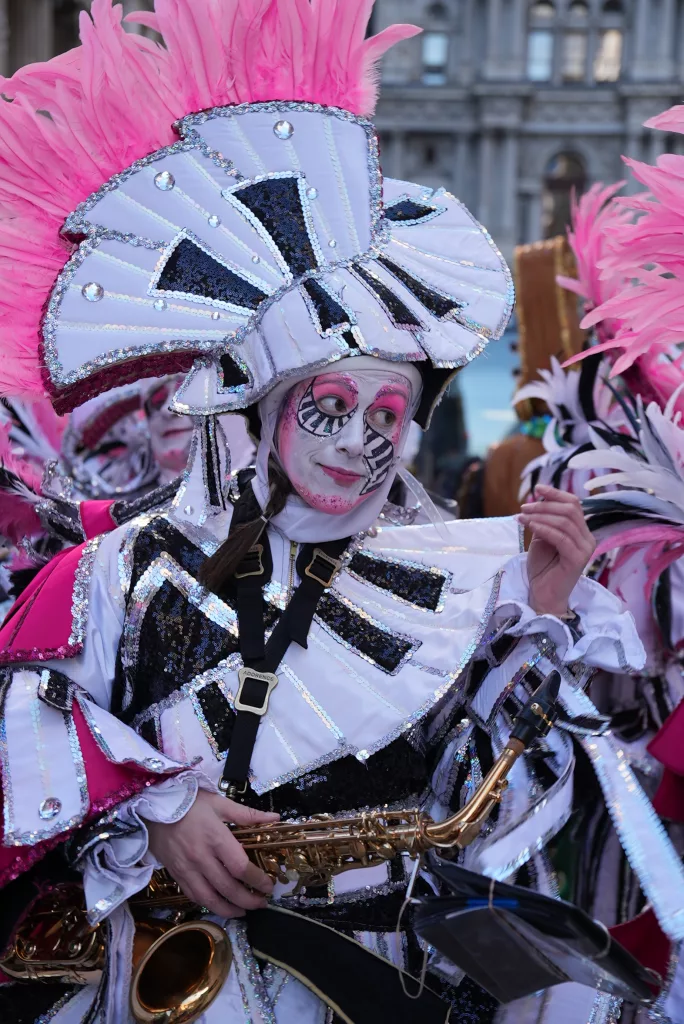
Early morning snow squalls left a light dusting on the ground, creating a striking contrast against the parade’s glittering costumes gliding down Broad Street.
The parade coincided with the start of celebrations for America’s 250th anniversary, adding extra significance to the milestone event. As Regalbuto emphasized to fans, the string bands remain committed: “We’re still here in full regalia to entertain you — the best show we can give under the circumstances.”
In true Philadelphia fashion, the show went on — windswept, chilly, and unbowed. The rescheduled String Band spectacular is expected to be announced soon, giving fans another chance to see the full productions.
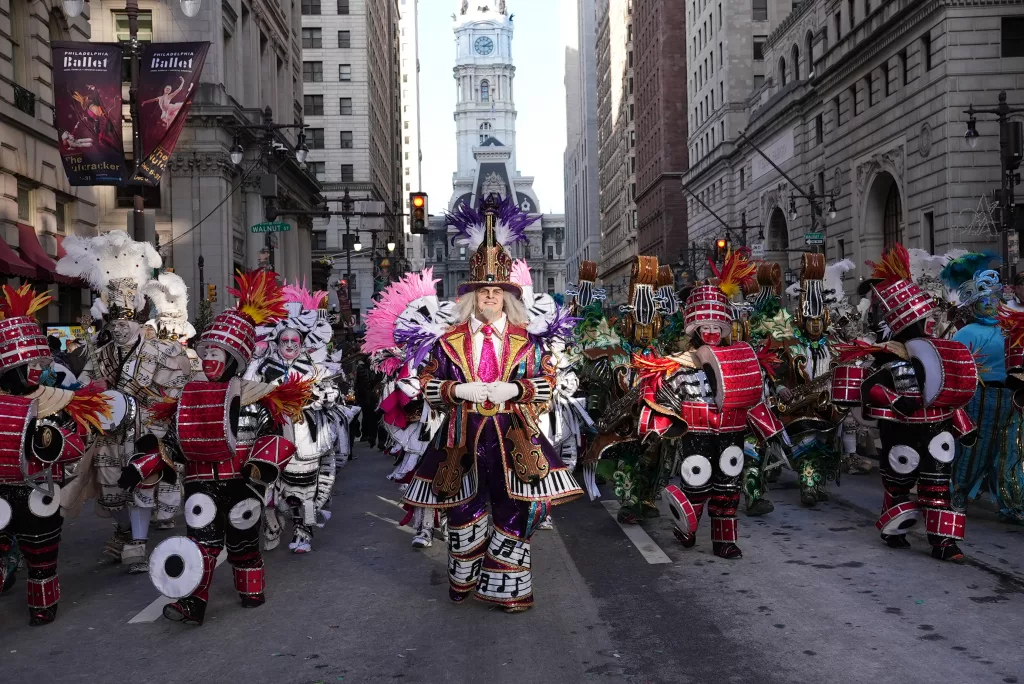
The Philadelphia Mummers Parade is the oldest continuous folk parade in the United States, celebrated every New Year’s Day along Broad Street. While the official city-sponsored event began in 1901, its roots trace back centuries to ancient and European traditions blended with early American colonial customs.
Mummery draws from ancient celebrations, including Roman Saturnalia (where masked revelers exchanged roles and gifts) and Greek influences tied to Momus, the god of mockery and satire. In Europe, “mummers’ plays” were folk dramas performed around Christmas and New Year’s in Britain, Ireland, and Scandinavia, often involving costumed performers going door-to-door with rhymes, dances, and requests for treats.

Swedish and Finnish settlers brought noisy New Year’s visits to the Philadelphia area in the 17th century, while British and Irish immigrants added mummers’ plays. By the 18th century, working-class Philadelphians celebrated with costumed street parades, noise-making (including gunfire), and house-to-house visits reciting rhymes like demands for whiskey or “pepper pot” soup.
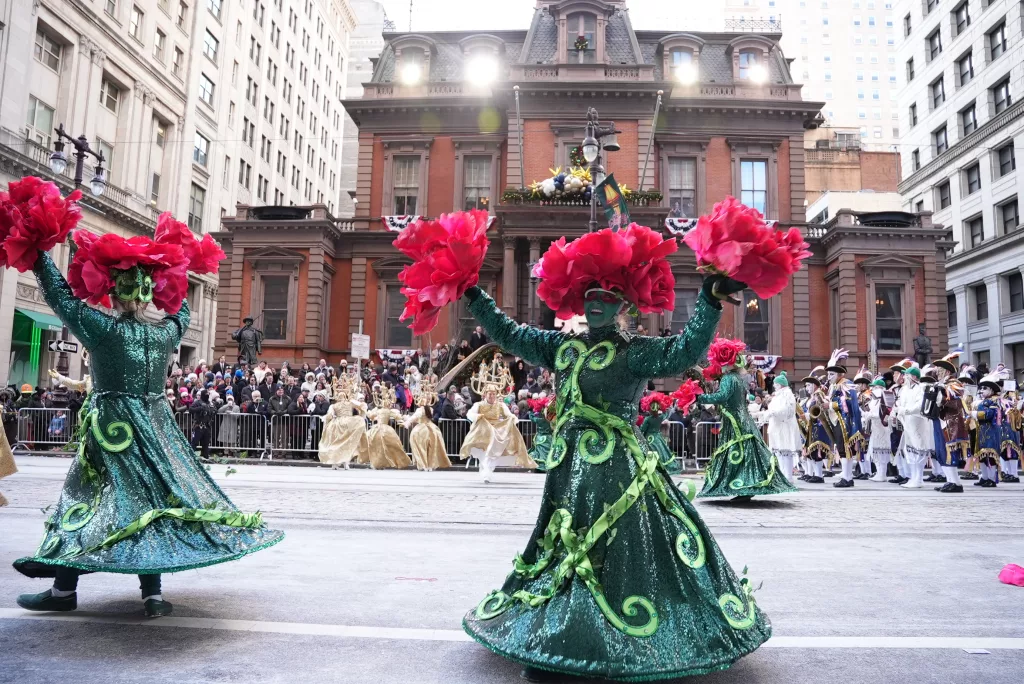
These festivities grew chaotic in the 19th century, with masqueraders in elaborate or satirical outfits. Masquerading was briefly banned in the 1800s as a public nuisance, but the tradition persisted underground. President George Washington reportedly received mummers’ visits during Philadelphia’s time as the national capital (1790–1800).
To organize the rowdy neighborhood celebrations, Philadelphia officially sponsored the parade in 1901, offering prizes for costumes, music, and performances. This turned informal “shooters” and revelers into structured clubs. Early parades featured comics, fancies, and emerging string bands with banjos, saxophones, and the signature “Mummers Strut.”
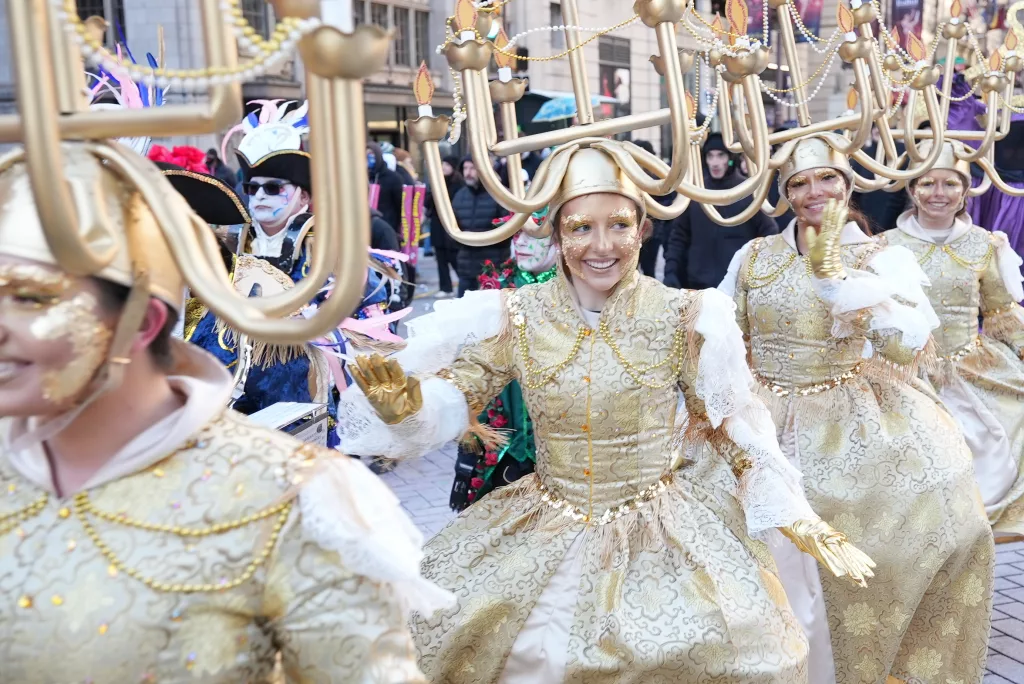
Today, about 10,000 participants in glittering costumes, feathers, and sequins perform for thousands along Broad Street, followed by celebrations on Two Street. The Mummers Museum in South Philadelphia preserves this vibrant history.