Chinese Drones Hold 70 Percent of the US Market, but New Models Cannot Be Sold

Seven out of ten drones flying in American skies are Chinese made. Yet new Chinese drone models are almost impossible to buy in official stores in the United States this year. A company that dominates the market and rules that close the market met in the same year.
The North American drone market is forecast to grow from 12.35 billion dollars in 2025 to 29.65 billion dollars in 2034, a compound annual growth rate of 10.22 percent. The United States commercial drone market alone is counted at 9.29 billion dollars in 2026. The global drone market grew from 83.8 billion dollars in 2025 to 96.4 billion dollars in 2026.
At the center of this market is DJI, based in Shenzhen, China. The United States Commerce Department counts DJI at about 70 percent of the United States commercial drone market. Its share of the United States consumer market is estimated at about 80 percent. In research funded by the Federal Aviation Administration, about 96 percent of drone activity detected by Remote ID sensors was DJI aircraft. Other Chinese makers such as Autel and XAG remain in agricultural and industrial niches.
Sales routes were wide, now they are narrow
DJI drones were long sold through the DJI online store, large retailers such as Amazon, Best Buy, B and H and Adorama, and an authorized dealer network. Enterprise and agricultural sales went through specialist dealers and direct business deals. From January through September 2026, tracked DJI channel sales were 94 percent online and 6 percent offline.
Cracks appeared last year. In June 2025, reports said inventory fell sharply at Best Buy, the DJI United States store, the Amazon official channel, B and H and Adorama. DJI said a customs related misunderstanding was the cause.
The decisive step came on December 22, 2025. The Federal Communications Commission put foreign made drones and drone critical components on its Covered List. New models after that date cannot receive Federal Communications Commission authorization and cannot be newly sold in the United States. Models authorized before that date can still be imported, sold and flown. The commission said the action applies only to future authorizations.
Tariffs added to the pressure. From September 3, 2026, imported drones carry tariffs of up to 100 percent. Prices rose and stock thinned. New models increasingly appear through grey market, used and parallel import channels rather than official routes. For buyers, checking whether the seller is DJI itself or an authorized dealer has become important.
New products arrive, but not in US stores
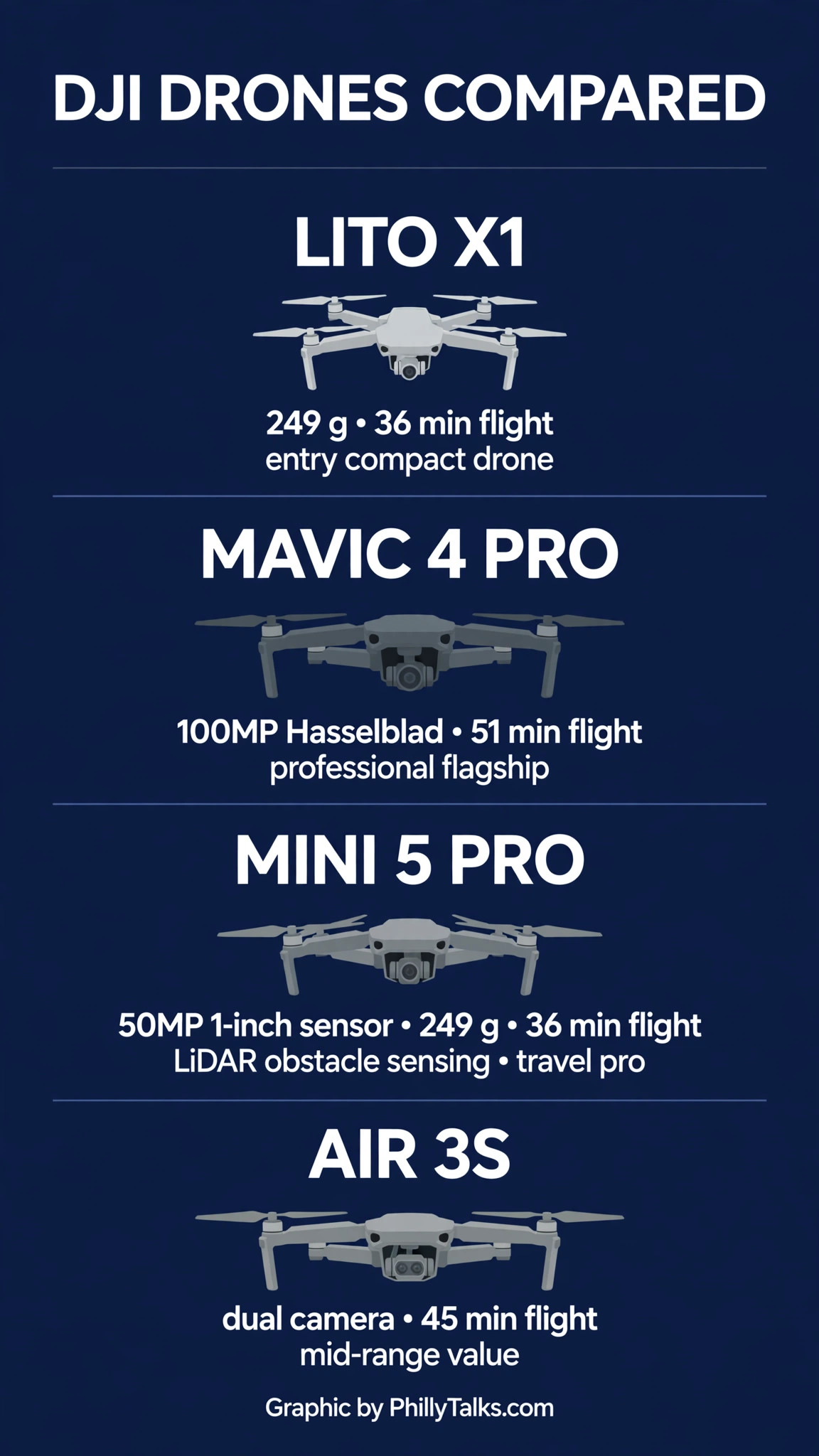
DJI kept releasing new products. The Mavic 4 Pro was announced on May 13, 2025. It has a 100 megapixel 4 thirds Hasselblad main camera, a triple camera system, 6K 60 frames per second HDR video and up to 51 minutes of flight. In the United States, however, a formal launch has almost not happened because of regulation.
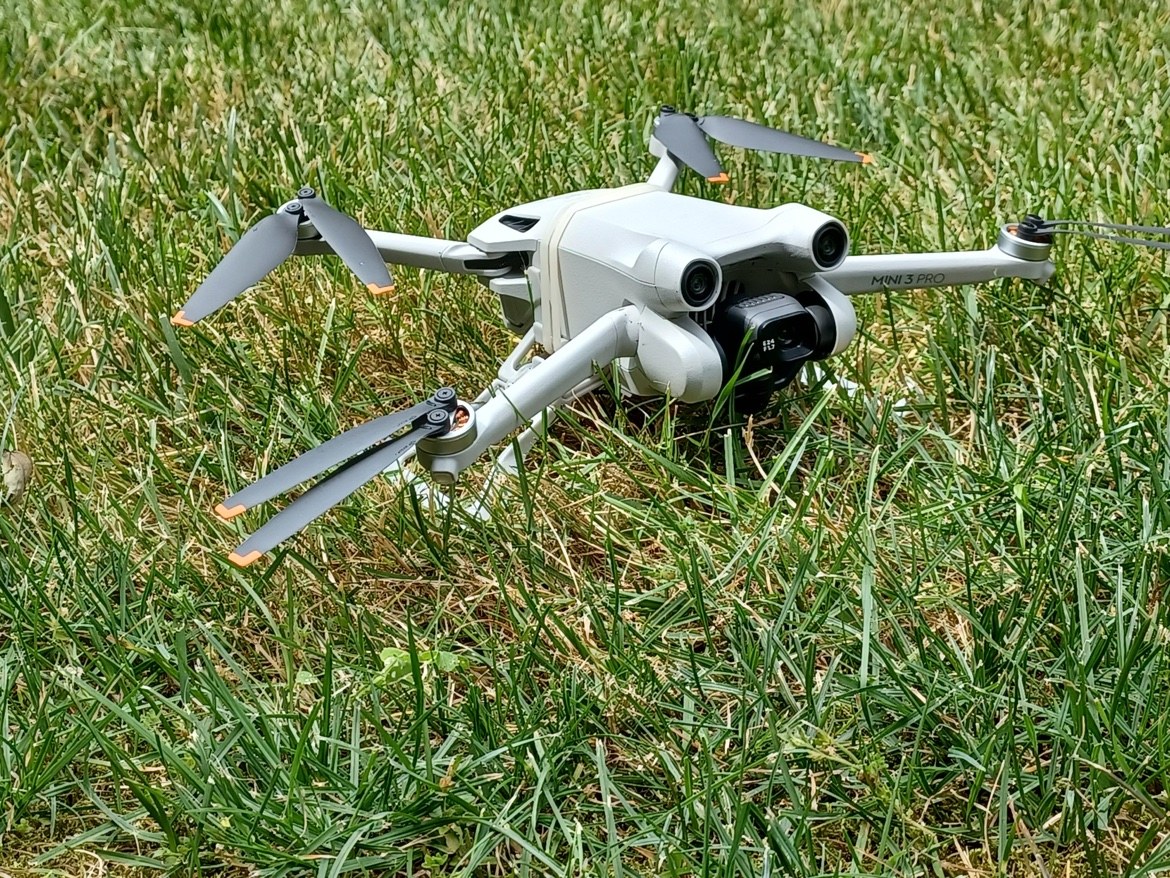
The Mini 5 Pro was announced on September 17, 2025. It weighs 249 grams and carries a 1 inch 50 megapixel sensor, an f 1.8 lens, forward LiDAR and night time omnidirectional obstacle sensing. It is effectively a professional grade model in the Mini line.
For enterprise use, the Matrice 400 arrived on June 10, 2025. It flies for 59 minutes, carries up to 6 kilograms and uses LiDAR and millimeter wave radar based obstacle sensing. It is aimed at power line inspection, search and rescue and large scale mapping. The Matrice 5T was announced on November 5, 2026, with intelligent day and night operation. In agriculture, the Agras T100 is the flagship.
The US market paradox
The United States drone market is growing, and Chinese drones dominate it. Yet new models cannot enter official stores in the United States. Older authorized models keep selling, but the technology can fall a generation behind. If American makers do not fill the gap, users are left with older Chinese drones or expensive grey market imports. The purpose of the rules was security, but the result on the ground is a supply gap.