
Waymo’s Ultimate Advance: How Soon Will Autonomous Driving Commercialize?

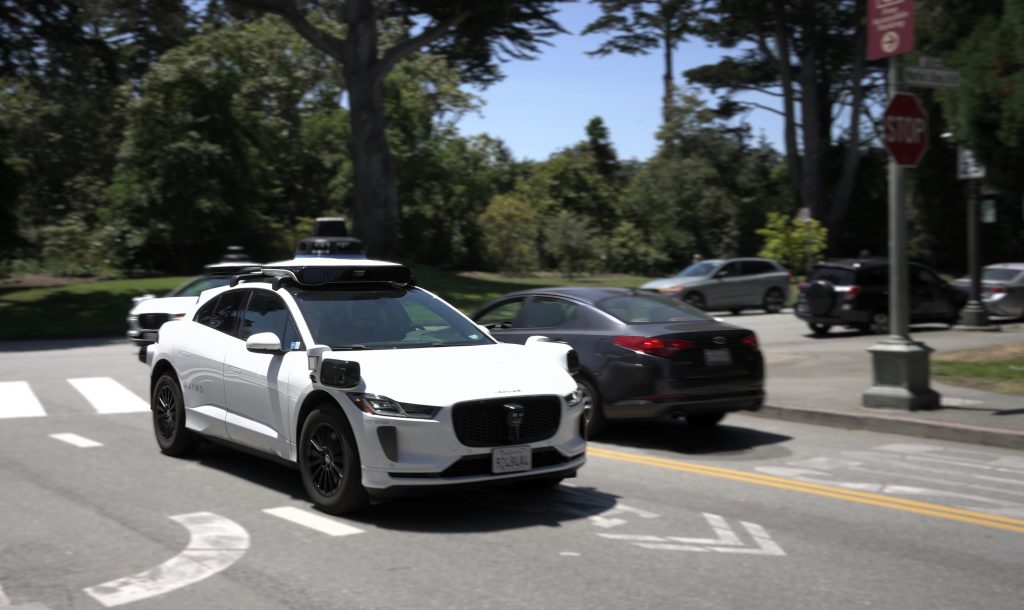
SAN FRANCISCO — Waymo, the autonomous vehicle company owned by Alphabet, is having a banner month. On Aug. 14, California regulators approved the company’s biggest service expansion yet, opening a swath of territory stretching from Sonoma County to San Diego to its driverless fleet. Days later, Waymo began rolling out a new, cheaper robotaxi model to riders in three major cities. But the company’s rapid growth has been shadowed by a rockier truth: even as Waymo scales up, it continues to stumble during precisely the kind of high-pressure moments — a blackout, a fireworks show, a holiday crowd — that test whether autonomous vehicles are truly ready for prime time.
A Sprawling New Service Area
The California Public Utilities Commission’s approval of Waymo’s updated passenger safety plan clears the way for the company to operate across 18 counties, according to the commission and company statements. The newly authorized territory runs from Sea Ranch in the north to San Diego in the south, and includes, for the first time, service in Sacramento. In a post on social media, Waymo called it “big news for the Golden State” and said the rollout would be “gradual and guided by our safety framework.”
The expansion means that, at least in theory, a rider could summon a Waymo in San Francisco and travel door to door to San Jose — a trip that takes more than an hour by commuter rail. The company’s California footprint already exceeds 1,400 square miles, larger than the state of Rhode Island, served by a fleet of roughly 3,000 vehicles that has completed more than 20 million paid trips.
The timing is notable: Waymo is facing fresh competition. Uber has said it will begin testing a rival robotaxi service in the Bay Area this fall using Lucid vehicles equipped with self-driving technology from Nuro, while Amazon’s Zoox has already begun offering rides in its own driverless vehicles in the region.
A New, Cheaper Robotaxi Hits the Streets
On Aug. 19, Waymo said it was opening its next-generation robotaxi, called the Ojai, to all riders in Los Angeles, Phoenix and San Francisco. The boxy, baby-blue minivan is built in partnership with Zeekr, an electric vehicle brand owned by China’s Geely, and is designed to be significantly cheaper to build and maintain than Waymo’s existing fleet of retrofitted Jaguar I-Pace S.U.V.s.
The Ojai runs on Waymo’s sixth-generation self-driving system. Despite carrying fewer cameras and lidar sensors than the Jaguars, the new sensors operate at higher resolution, and the vehicle has been built to handle harsher conditions, including snow. It also features flat floors and wide doors intended to accommodate wheelchair users, along with an in-cabin assistant powered by Google’s Gemini A.I. model.
About 300 Ojai vehicles are currently on the road, according to the company, with additional rollouts planned this year in Las Vegas, Denver and San Diego as Waymo works to replace much of its Jaguar fleet.
A Chaotic Fourth of July
The company’s momentum has not come without setbacks. On the night of July 4, dozens of Waymo vehicles became stranded in San Francisco’s Presidio neighborhood after a fireworks display over the Golden Gate Bridge drew enormous crowds and unplanned road closures. Videos verified by news organizations showed more than a dozen driverless cars stopped in the street as frustrated pedestrians shouted at the empty vehicles. Some cars idled for hours until their batteries died and had to be towed; one vehicle was seen driving over a lit firework, though the company said no injuries were reported.
A Waymo spokesperson said at the time that “extreme traffic congestion in Northern San Francisco disrupted normal operations for several Waymo vehicles,” and that the company was working with city officials to understand what went wrong. It was not the fleet’s first embarrassing failure during a major disruption: in December, a power outage caused by a fire at a PG&E substation left more than 1,500 Waymo vehicles stalled at intersections with dead traffic signals, prompting a contentious hearing before the San Francisco Board of Supervisors in March.
The July 4 episode has prompted a similar reckoning. City Supervisor Stephen Sherill has called for a hearing, expected in September, to assess the city’s preparedness before Fleet Week, a large annual celebration in October that draws crowds comparable to those on Independence Day.
Scaling Up the Back End
Away from the spotlight, Waymo has also been building out the infrastructure needed to operate a fleet expanding toward a stated goal of one million paid rides a week by the end of the year — more than double its current volume of roughly 400,000 weekly rides. In June, the company signed a multiyear partnership with Element Fleet Management, the world’s largest publicly traded fleet management company, to handle vehicle charging, cleaning, maintenance and lifecycle management, beginning with Waymo’s launch in San Diego before expanding to other markets.
The Bigger Picture
Taken together, the developments illustrate the central tension in Waymo’s push toward becoming a mainstream transportation option: regulatory approvals and manufacturing advances are arriving quickly, but the company’s ability to manage its fleet gracefully during moments of real-world chaos remains, in the eyes of city officials and residents, an open question. How Waymo performs during Fleet Week in October may offer the next test of whether the lessons of December’s blackout and July’s fireworks gridlock have actually been learned.