
SpaceX Seeks 80,000 Cell Sites to Build a National Wireless Network

Elon Musk’s SpaceX is moving beyond satellites and going after ground sites too.
According to multiple reports, SpaceX is negotiating with major tower operators for access to at least 80,000 cell sites across the United States to build a nationwide mobile network. Crown Castle, one of the country’s largest tower companies, is reported to be among the operators in the talks.
The goal is clear. SpaceX wants to combine newly acquired ground spectrum with its Starlink satellites into a fourth nationwide mobile carrier alongside AT&T, Verizon and T-Mobile.
On Oct. 8, SpaceX announced it would acquire Grain Management’s nationwide portfolio of 800 megahertz low-band spectrum. The price was reported at about $8 billion in cash, according to Reuters. Low-band signals travel long distances and pass through walls, making the band central to indoor coverage. Shares of the three incumbent carriers fell 6 to 7 percent after the announcement.
Federal regulators have kept pace. On Oct. 6, the Federal Communications Commission approved a constellation of 15,000 second-generation Starlink satellites built to connect directly to phones, and waived the rule requiring SpaceX to lease spectrum from a ground-based carrier. On Oct. 21, the FCC approved SpaceX’s purchase of wireless licenses held by Mississippi-based Tristar.
SpaceX’s own judgment is that satellites alone are not enough. Satellite signals struggle to reach deep inside buildings and dense cities, so filling in urban and indoor coverage takes ground base stations. The company says it would be the first operator to combine satellite and terrestrial spectrum into a single network covering indoors, outdoors and cellular dead zones alike.
Today’s Starlink phone service runs through T-Mobile on about 650 satellites at speeds near 4 megabits per second. The company is promising up to 150 megabits per user in the second generation, more than 100 times the current bandwidth. Those are company targets, not measured results.
Money and time are the biggest obstacles. Analysts estimate a terrestrial buildout would take years and cost from tens of billions of dollars to more than $80 billion. Support from phone makers and operating systems, final contracts with tower companies and remaining regulatory approvals are all still open. The EchoStar spectrum deal is not scheduled to fully close until November 2027.
Tower companies reacted first. Crown Castle shares rose 9.46 percent in after-hours trading on Oct. 22, when the site talks were reported, and tower stocks including Crown Castle, American Tower and SBA Communications jumped 8 to 11 percent on Oct. 9 on the spectrum news.
Crown Castle’s own business, meanwhile, is shrinking. The company reported third-quarter revenue on Oct. 21 of $995 million, down 7.2 percent from a year earlier, with net income down 12 percent. Terminations by the satellite broadcaster Dish cut revenue by $61 million. Even so, Crown Castle raised its full-year outlook, and its executives pointed to a potential SpaceX ground deployment as a long-term source of demand.
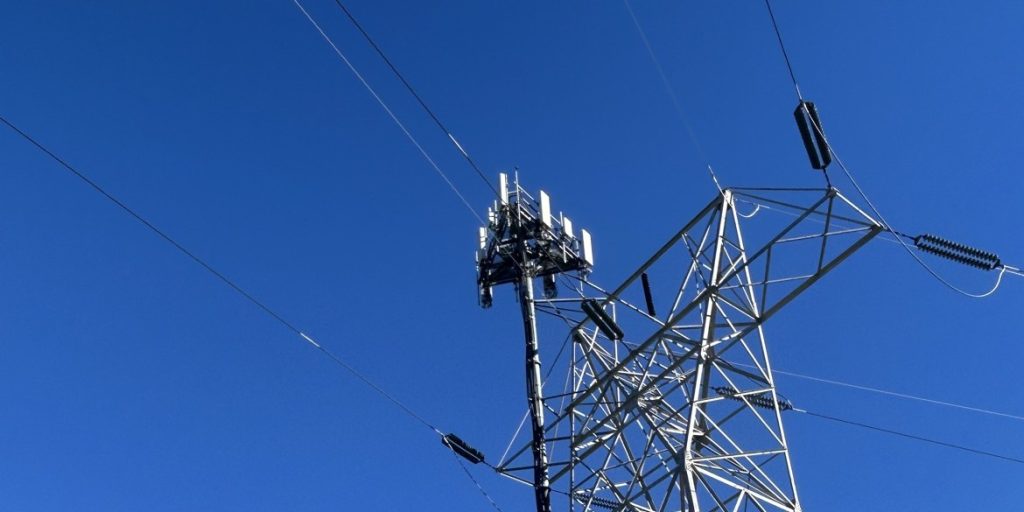
Eighty thousand sites is, in the end, a sum of familiar structures. Alongside purpose-built cell towers, any place an antenna can be mounted is a candidate, from electrical transmission towers to rooftops. If Musk’s wireless plan holds, the tenant on towers across the country could start changing.