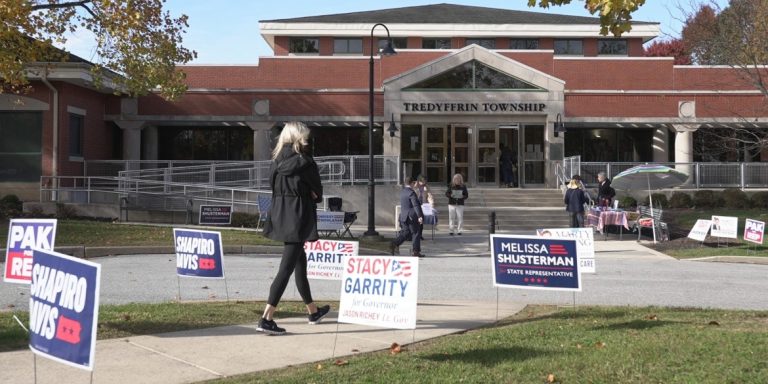
Democrats Win Full Control in Pennsylvania as Shapiro Cruises to a 22-Point Victory

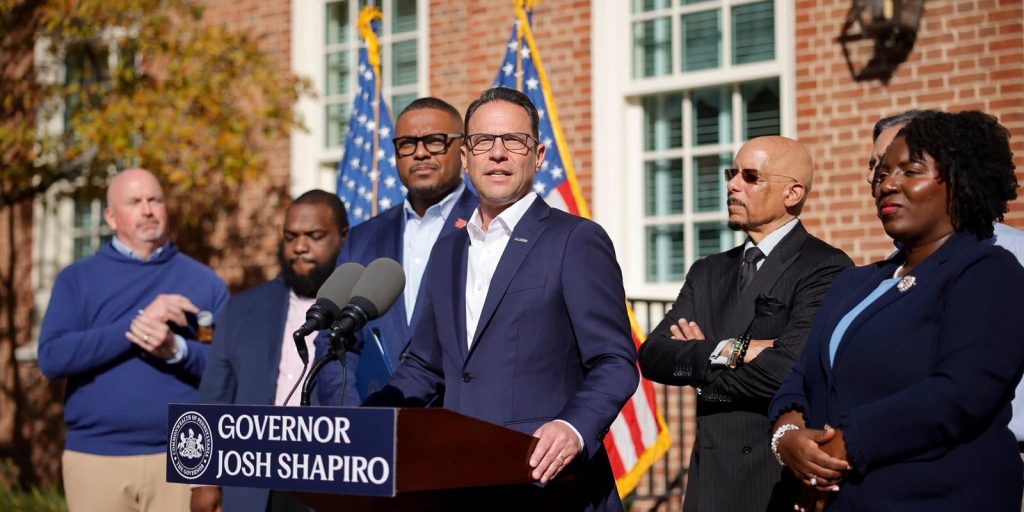
Pennsylvania Democrats now control the governor’s office, the state House and the state Senate. They took the Senate majority for the first time in 30 years. Gov. Josh Shapiro won reelection, beating Republican Stacy Garrity by more than 22 percentage points.
Shapiro received 3,009,220 votes (60.4%) to Garrity’s 1,907,685 (38.3%). Libertarian Ken Krawchuk received 64,471 votes (1.3%). The margin was more than 1.1 million votes. The Associated Press called the race minutes after polls closed. The count is unofficial until certified by election officials, with 98.7% of precincts reporting.
Control of all three matters because of how a bill becomes law. In Pennsylvania, a bill must pass the governor, the House and the Senate. For the past four years, the state had Shapiro as governor, a Democratic House and a Republican Senate. Bills the House passed died in the Senate without a vote. House Speaker Joanna McClinton said House bills got “stuck in a shredder over there in the Senate Republican majority caucus room.”
With Democrats controlling all three, stalled measures can now move. Party leaders named raising the minimum wage to $15 an hour as the first priority. “If you are working and making the minimum wage in Pennsylvania, we’re going to, as the first order of business, double that sucker,” Sen. Vince Hughes, D-Philadelphia, said at a rally Wednesday on the state Capitol steps. Funding mass transit, codifying abortion rights, building more housing and opening a window for abuse survivors to sue their abusers were also named as priorities. New members take office Jan. 5, and a joint agenda for the first 100 days is coming soon.

Shapiro’s win reaches beyond Pennsylvania. The state is a battleground. President Donald Trump won it in 2024. A Democratic governor winning there by 22 points means winning across rural, urban and suburban areas alike. Shapiro said at a Wednesday event that no matter where he went, people showed up “with tears in their eyes.”
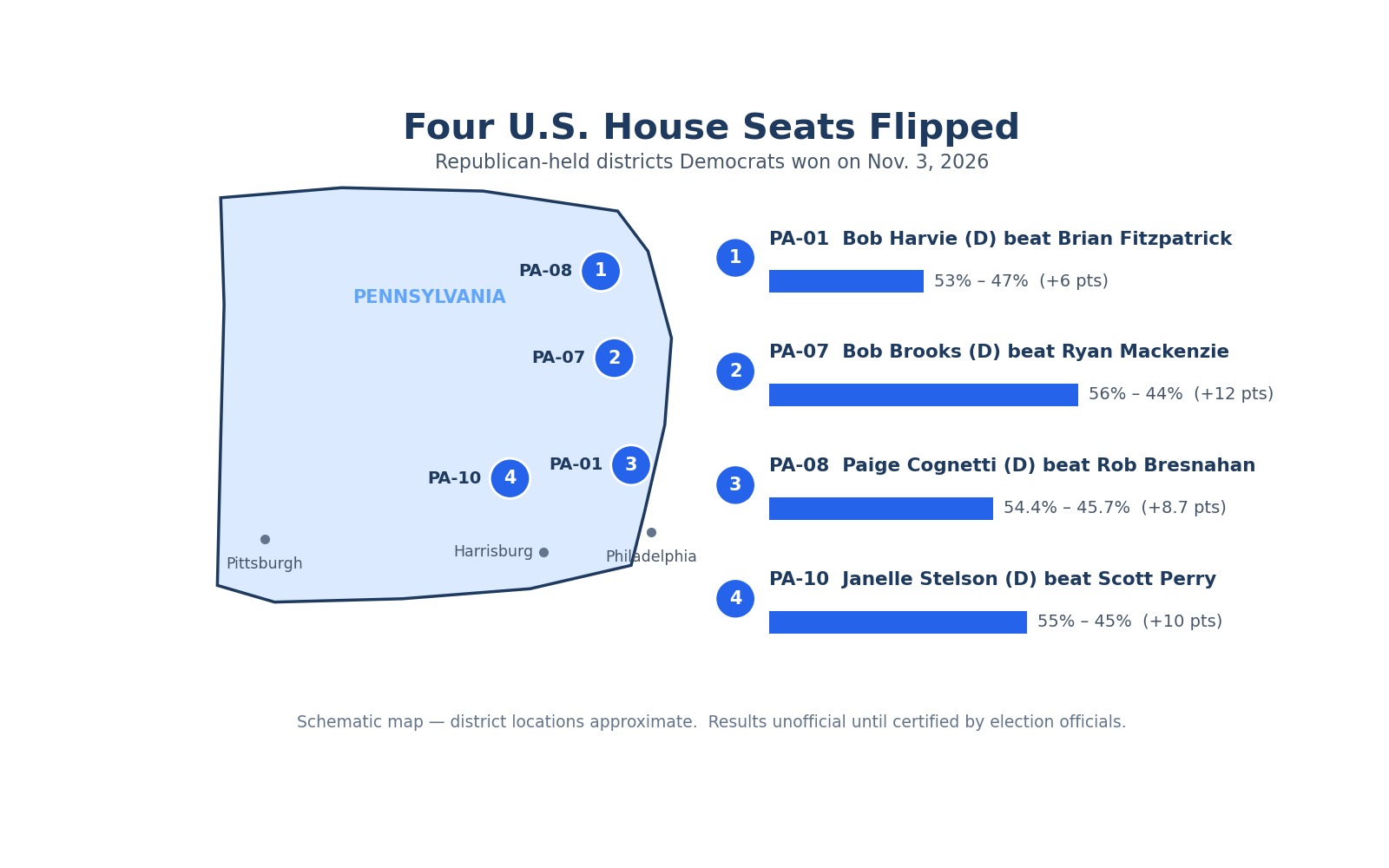
Freed from worrying about his own race, Shapiro spent his time and money on races down the ballot. He focused on four Republican-held U.S. House seats and put $10 million into down-ballot races. Democrats flipped all four. Bob Harvie beat Brian Fitzpatrick 53% to 47% in the 1st District, Bob Brooks beat Ryan Mackenzie 56% to 44% in the 7th, Paige Cognetti beat Rob Bresnahan 54.4% to 45.7% in the 8th, and Janelle Stelson beat Scott Perry 55% to 45% in the 10th.
The victory connects to the 2028 presidential race. Berwood Yost, director of the Center for Opinion Research at Franklin & Marshall College, said Shapiro “showed that he can appeal to voters of all types,” adding to his credibility as a potential presidential candidate. Yost called flipping all four seats “pretty amazing” and said taking the governorship, the House and the Senate was something that “hasn’t happened in generations.”
An election analysis from the Cook Political Report attributed Trump’s 2024 victory to closing the border, lowering inflation and avoiding more wars, but argued that he had only addressed the border situation. “Democrats had long argued that Trump’s chaotic disregard for democratic norms and the rule of law would be his undoing,” the Cook summary said. “Instead, it was Trump’s disregard for his own promises and priorities that doomed his party back into the political wilderness in 2026.”
Control of all three does not guarantee everything. The Senate majority is 26-24, a two-seat edge. Disagreements inside the Democratic Party can still block bills. Lawmaking also takes time. Committee review, readings on three separate days, passage in both chambers and the governor’s signature can take weeks or months. Shapiro has not said he will run for president in 2028. A primary is a separate process.
The election results are still unofficial. They become final once certified by state election officials.