Lula’s Fourth Term, Why He Won and What Comes Next

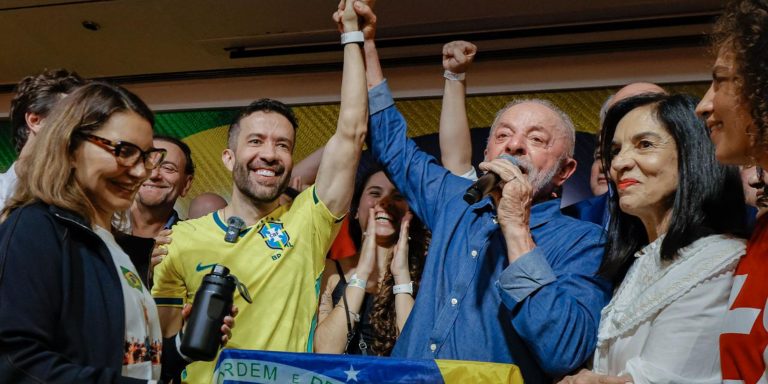
Luiz Inácio Lula da Silva won Brazil’s runoff on Oct. 25, securing a fourth term as president. He finished second in the first round on Oct. 4, and he is the first candidate since direct elections resumed in 1989 to win a runoff after trailing in the first round.
Lula took 51.8 percent of the vote against 48.2 percent for Flávio Bolsonaro, a margin of about 4.4 million votes. Lula is 80 years old and turns 81 on Oct. 27. His fourth term begins on Jan. 5, 2027.
Minas Gerais and the Northeast Turned the Race
Geography was the key to the comeback. In Minas Gerais, the state with Brazil’s second-largest electorate, Lula trailed by about 590,000 votes in the first round and led by about 99,000 votes in the runoff, a swing of about 690,000 votes in the gap between the two candidates. CNN reported that Minas Gerais has picked the national winner in every direct presidential election since 1989.
Winning all nine states in the Northeast also anchored the result. Lula won the capitals of São Paulo and Rio de Janeiro states as well, and in the city of Rio de Janeiro he reversed the first-round result.
Turnout helped, too. Abstention fell from 21.08 percent in the first round to about 19.2 percent in the runoff, bringing about 3 million more voters to the polls. CNN cautioned that the added participation cannot be credited entirely to Lula, but said moving people who had stayed home mattered.
Cost of Living and Phones Moved Votes
CNN reported that the election was dominated by concerns over the cost of living, crime and corruption. After the first round, Lula’s campaign stepped up digital mobilization. The task was not only to persuade voters who had not decided, but to get people who already supported Lula to the polls.
A series of pocketbook measures followed. Lula signed a law raising the tax threshold for individual microentrepreneurs, proposed a way to renegotiate consumer debt, and argued for ending online betting that had deepened household debt.
In his victory speech, Lula thanked young people who “took to the streets to defend democracy.” He also stressed sovereignty in Brazil’s relationship with the United States, saying, “This country will not be anyone’s backyard.”
A Wall Called Congress
The joy of victory and the conditions for governing are different things. Reuters reported that the incoming Congress will be the most conservative since democratization in the 1980s. Bolsonaro’s Liberal Party holds 121 of the 513 seats in the lower house and 28 of the 81 seats in the Senate, and conservative and centrist allies together can command more than 280 seats in the lower house.
Lula has no majority in Congress. To pass legislation, he will have to rely heavily on the Centrão, the bloc of center-right parties that trades support for a governing coalition. Mayra Goulart, a professor at the Federal University of Rio de Janeiro, told AFP that lawmakers now decide a growing share of the federal budget and have become more independent of the executive.
Oliver Stuenkel of the Getulio Vargas Foundation said Lula was likely to be “a lame duck from the start.” Michael Paarlberg of the Center for International Policy described Lula as “still the most dominant political figure of his era, but weakened.”
A Bigger Wall Called the Budget
The budget is a bigger wall still. Reuters reported that Brazil’s public debt has passed 82 percent of gross domestic product, its highest level since the pandemic, and the government forecasts economic growth of 2.3 percent next year. High interest rates add to the fiscal burden.
Mauro Rochlin, an economist at the Getulio Vargas Foundation, told AFP that “Brazil’s three big problems are the fiscal problem, the fiscal problem, and the fiscal problem.” He warned that conditions could “turn into an economic crisis very quickly.”
Société Générale expects fiscal consolidation to proceed only gradually, leaving debt concerns in place and the benchmark Selic rate high, at 12.25 percent at the end of 2027. Markets have already reacted. Reuters reported that investors had bought Brazilian stocks, bonds and the real in expectation of a Bolsonaro win, and that gains of 10 to 15 percent in exchange-traded funds since the first round could be given back.
Refusal to Concede and What Remains
Bolsonaro has not accepted the result. He objected to the Supreme Court’s decision to extend voting by two hours and said, “It is impossible to recognize the election result given how these events unfolded,” adding that he would seek to have the election annulled. The extension was requested by Lula’s camp, citing a shortage of buses in parts of Bahia state, and Justice Cristiano Zanin extended it nationwide. Zanin said both campaigns had raised transportation problems.
Société Générale said a legal reversal did not look likely, but protests, court disputes and political tension could continue. The electoral court has declared Lula the winner, and formal certification is scheduled for Dec. 18.
A historic victory and a narrow space to govern. Lula’s fourth term begins in that paradox.