
The Data Center Boom Is Lifting Pennsylvania Household Electric Bills

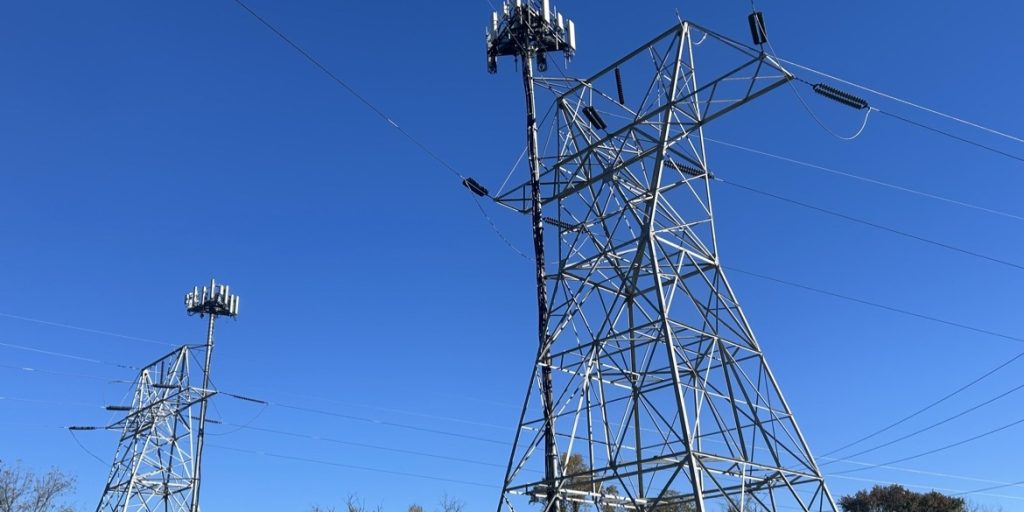
Behind the rising electric bills of households across the East and Midwest, including Pennsylvania, sits the rapid growth of artificial intelligence data centers. The warehouse-sized facilities packed with servers draw power around the clock as they run cooling equipment, and that demand itself is expanding the generation capacity the regional grid has to secure.
PJM Interconnection is the eastern grid operator that supplies electricity to 67 million people in 13 states, including Pennsylvania, and Washington. The capacity auction PJM holds every year works like a retainer paid to power plants, separate from payment for the electricity they actually produce, paying plants to stay ready to run at moments when demand surges during heat waves or cold snaps.
That retainer price has jumped more than tenfold in three years. According to PJM, the capacity price was $28.92 per megawatt-day for the 2024-25 delivery year, soared to $269.92 the following year, and reached the federally approved cap of $329.17 in the auction for the 2026-27 delivery year.
The climb has not stopped since. The auction for the 2027-28 delivery year, announced last December, closed at the cap of $333.44, with the total cost reaching $16.4 billion. The most recent auction, for the 2028-29 delivery year, announced July 14, 2026, also closed at the cap of $325, and the capacity secured fell 6,831 megawatts short of the reliability requirement, PJM said.
PJM itself says data centers sit at the center of the demand growth. PJM said its peak demand forecast for the 2027-28 delivery year rose by about 5,250 megawatts from the previous auction, and about 5,100 megawatts of that was data center demand. Stu Bresler, a PJM vice president, said data centers’ power demand is far outpacing new supply.
Monitoring Analytics, the independent market monitor, put figures on the cost shifting. The monitor analyzed that data center load alone increased the revenue of the auction for the 2025-26 delivery year by $9.33 billion, equivalent to about 63 percent of total capacity costs. Across the four most recent auctions combined, it estimated, data centers accounted for $29.4 billion of the $63.6 billion in costs.
The effect on household bills appears differently in each state and at each utility. PJM expected the prices for the 2026-27 delivery year to lift some customers’ bills by 1.5 percent to 5 percent from the year before. The Institute for Energy Economics and Financial Analysis estimated that the auction for the 2025-26 delivery year alone added about $18 a month on average for households in western Maryland and about $16 a month for Ohio households, and the Natural Resources Defense Council projected that if the current trend continues, the average household bill in the PJM region could rise by about $70 a month by 2028.
Consumer groups and some researchers take issue with a structure in which the projected demand of data centers not yet built is already reflected in current rates. Under the current system, in which all customers share the cost of securing generation capacity in advance, households and small businesses that do not use data centers also end up bearing costs for the giant facilities. The Pennsylvania Sustainable Business Network pointed out in a report last September that small businesses cannot negotiate rates on the same terms as giant technology companies.
The utilities and PJM emphasize a different side. PJM explains that capacity costs are only part of wholesale power costs, and wholesale costs are in turn only part of retail bills. In cases reported by the trade publication Data Center Knowledge, Indiana Michigan Power lowered customer rates 3.6 percent this year, citing increased revenue from large customers, and Georgia Power won approval to keep a base rate freeze in place through 2028 even as data center demand surged. The companies argue that large, steady demand lets fixed costs be spread across a greater volume of electricity sales, which can bring average rates down.
There is wide disagreement over the conditions under which that argument holds. Energy experts told Data Center Knowledge that the fixed-cost spreading effect appears when new demand can be met with existing facilities, but that rates can rise once new power plants and transmission lines have to be built. Amanda Peterson Corio, Google’s head of energy, said large customers should bear the costs of their own growth to protect their neighbors and build a cheaper grid for everyone.
Pennsylvania’s state government and legislature are moving to change how the costs are shared. A settlement reached in a lawsuit Gov. Josh Shapiro brought against PJM led to the introduction of the auction cap, and the governor’s office estimated that the cap saved state consumers about $1.6 billion in the auction for the 2026-27 delivery year. The state House this year passed a bill that would apply a separate rate class to large data centers and bar the costs of new generation and transmission from being passed on to ordinary customers, and sent it to the Senate, while the Data Center Coalition, an industry group, opposed the measure, saying such unequal treatment could deter investment.
The same question has been raised at the federal level. According to Reuters, the Federal Energy Regulatory Commission recently pressed PJM to revise its power procurement plans in a direction that ensures large electricity users bear the related costs. PJM spokesman Jeff Shields told Reuters that PJM is focused on properly allocating costs to the customers who cause them and on protecting consumers. More than the growth in demand itself, the rules on who pays the costs look set to decide the direction of household bills from here.