
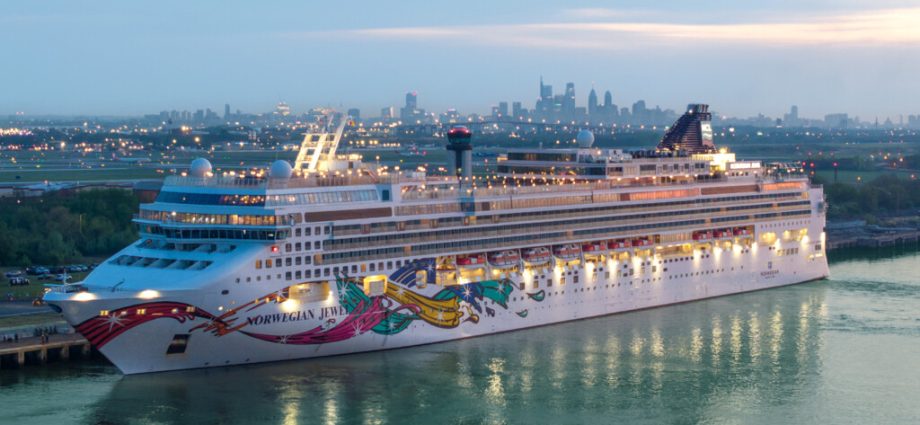
PhilaPort (The Port of Philadelphia), the gateway to Pennsylvania, is transforming into a global multi-modal maritime hub encompassing commercial logistics, advanced defense technology, and passenger cruises. Driven by record-breaking container and auto cargo volumes, the completion of a large-scale cruise terminal, and unprecedented financial support from the state government, it is playing a key role in driving regional economic growth.
Revival After 15 Years: Official Opening of the $60 Million PhilaPort Cruise Terminal
The biggest news at PhilaPort is the official opening of the newly built PhilaPort Cruise Terminal on August 27. A grand ribbon-cutting ceremony took place on the former Hog Island site near Philadelphia International Airport, attended by Philadelphia Mayor Cherelle Parker and key state government officials.
Built with a total investment of $60 million across 16 acres, this permanent terminal was completed after overcoming challenges such as harsh winter weather and permitting delays. Norwegian Cruise Line (NCL), which resumed cruise operations in April after a 15-year hiatus using temporary facilities, officially kicked off full-scale terminal operations starting with the departure of the Norwegian Jewel.
The terminal opening is projected to create 2,185 direct and indirect jobs in Pennsylvania, generate an economic impact of $300 million annually, and bring tens of millions of dollars in new tax revenue to the local community. Under a 7-year berth agreement signed through 2033, NCL plans to expand routes to Bermuda, the Caribbean, and Canada by introducing large cruise ships such as the Norwegian Pearl and Norwegian Gem.
Ranked #1 in North American Productivity… Breaking All-Time Records in Container and Auto Cargo
Growth in commercial cargo is even stronger. Recent confirmed statistics show PhilaPort handled a total of 889,268 TEUs (20-foot container units), breaking its all-time record for the second consecutive year. This represents a 6% year-over-year increase—double the projected US overall trade growth rate (3%). Notably, PhilaPort was named the most efficient port in North America in the Container Port Performance Index (CPPI) jointly released by the World Bank and S&P Global.
This surge is led by fresh food imports, including agricultural products and meat from South America. Cold storage containers account for 64% of all imported cargo, prompting the port authority to soon complete a large-scale refrigerated warehouse (PDC Cold) to meet growing demand.
Additionally, the Southport Auto Terminal—a hub for importing vehicles from global automakers, including Korea’s Hyundai and Kia—handled a record 281,819 units in a year. Facing yard capacity constraints, the port authority recently invested $46 million to acquire an adjacent 20-acre parcel to expand its Vehicle Processing Center.
Unprecedented State Support and Future Employment Roadmap: ‘Destination 2040’
Behind this major leap is dedicated financial support from Pennsylvania Governor Josh Shapiro’s administration. To modernize PhilaPort’s infrastructure, the state continuously allocates and executes approximately $81 million annually in Commonwealth Transfers.
The state government provides a $30 million transportation infrastructure budget for port access road improvements, alongside aging rail line reconstruction projects and a container incentive program ($25 per TEU) to attract global carriers. Even amid risks of federal funding freezes, the state maintains a strong backup line through its own 5-Year Capital Master Plan.
The surge in cargo volume is reshaping the labor market. The port logistics ecosystem currently supports about 66,000 jobs statewide. Upon completion of PhilaPort’s 15-year master plan, “Destination 2040,” an additional 19,000 high-quality jobs are expected to be created.