
How Mega Asian Supermarkets Are Redefining Food Retail in Greater Philadelphia
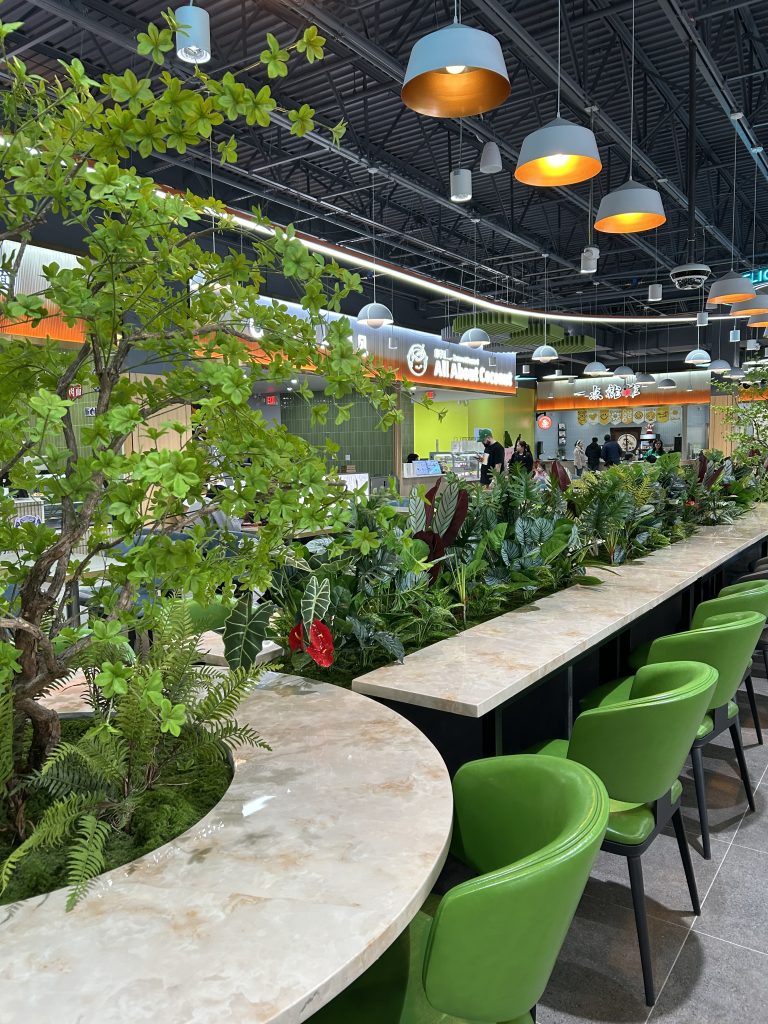
Located on the upper level of the newly expanded Hung Vuong Food Market (254 Swedesford Rd, Berwyn), the second-floor food hall offers an inviting, garden-inspired seating area with modern curved counters, vibrant lime-green armchairs, and diverse Asian dining stalls

What was once a network of modest, neighborhood-bound markets catering almost exclusively to immigrant communities in urban enclaves has transformed into a major retail and economic force across the Greater Philadelphia region.
From sprawling suburban centers in Cherry Hill and King of Prussia to cultural hubs in South Philadelphia, mega Asian grocers like H Mart, Hung Vuong Food Market, and Assi Plaza are driving an unprecedented shift in consumer behavior—reshaping commercial real estate and redefining the modern grocery experience.
A Multi-Billion-Dollar National and Regional Boom
The rapid expansion of Asian supermarkets in the Philadelphia metropolitan area reflects a broader nationwide trend driven by shifting demographics and evolving consumer preferences.
According to data from the U.S. Census Bureau, the Asian American population grew by 35.6% between 2010 and 2020, making it the fastest-growing major racial or ethnic group in the United States. Regionally, the impact is even more pronounced: census data compiled by the Asian American Chamber of Commerce of Greater Philadelphia shows that Asian Americans now represent approximately 8.3% of Philadelphia total population, following a 72% growth rate across the region between 2000 and 2015.
This demographic growth has fueled massive economic momentum. Industry research by Persistence Market Research evaluates the U.S. Asian food market at “$38.1 Billion” and projects it to reach “$52.5 Billion by 2032,” expanding at a Compound Annual Growth Rate (CAGR) of 4.7%.
Commercial real estate firm Faris Lee Investments highlights that Asian supermarkets across the country represent a total market size of “$49 billion” and employ over 200,000 people, positioning these chains as “their own strategic niche well-positioned to succeed long-term.”
Suburban Footprints: From Chinatown Outposts to 60,000-Square-Foot Anchors
While traditional Western grocery chains continue to struggle with store closures and downsizing, Asian supermarket operators are aggressively acquiring large suburban spaces, often taking over former traditional supermarket sites.
As noted by Produce Business Magazine, regional chains like Hung Vuong Supermarket which opened a massive “60,000-square-foot” store in Cherry Hill, NJ demonstrate how grocers that originated as a “single store at the gates of Philly’s Chinatown” have successfully scaled into major suburban retail anchors.
Similarly, H Mart, which launched its first storefront in Woodside, Queens, in 1982, now operates nearly 100 locations nationwide. Locations in Upper Darby, Elkins Park, and Cherry Hill regularly draw shoppers from across county lines, serving as primary traffic drivers for adjacent strip malls and shopping centers.
Experiential Retail vs. Routine Grocery Shopping
What separates these megastores from standard regional grocers like Giant, ACME, or ShopRite is a fundamental difference in product philosophy and retail strategy. Modern Asian grocers operate on an experiential retail model, turning routine grocery trips into cultural and culinary excursions.
1. Integrated Lifestyle & Food Hubs
Unlike standard self-service supermarkets, Asian megastores feature multi-vendor food courts serving authentic Korean fried chicken, Japanese ramen, boba tea, and fresh bakeries alongside skincare shops, home appliance vendors, and pharmacy services.
2. Live Seafood and Custom Butchery
While standard grocers rely heavily on pre-packaged, frozen, or filleted options, stores like H Mart and Hung Vuong maintain expansive live seafood tanks (tilapia, lobster, crab, and flounder) with on-demand cleaning and filleting. Butchery counters offer specialized cuts, such as paper-thin beef and pork belly tailored specifically for hot pot, shabu-shabu, and Korean BBQ cuts rarely accessible at traditional American butcher blocks.
3. Unrivaled Produce Volume and Pantry Depth
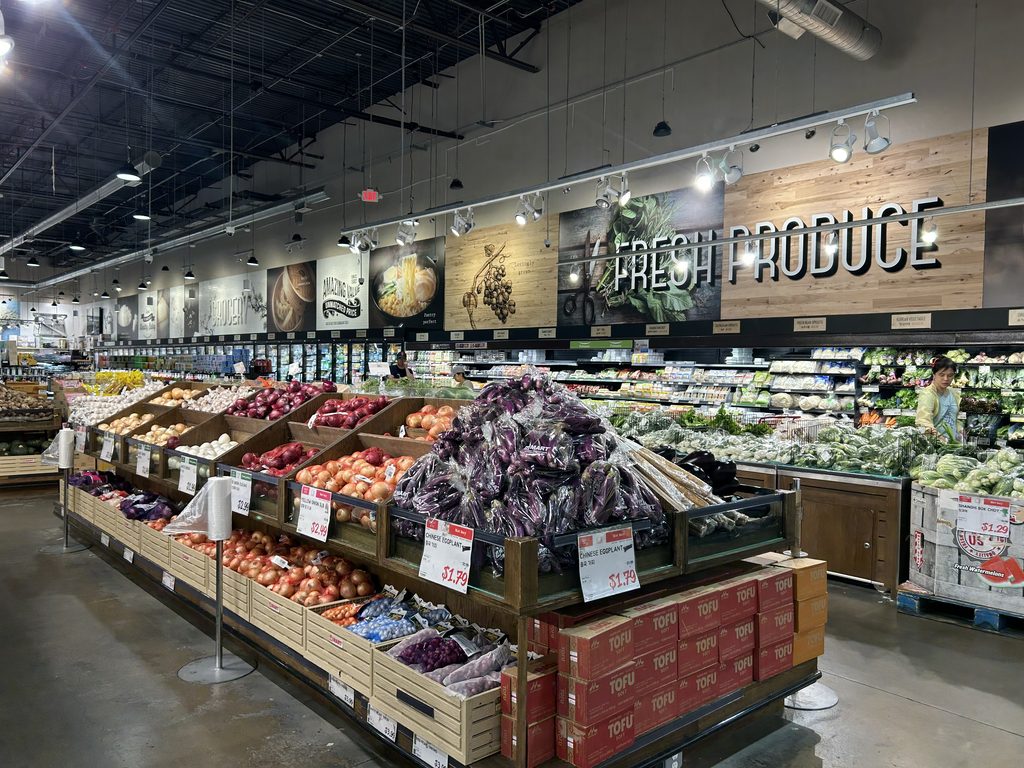
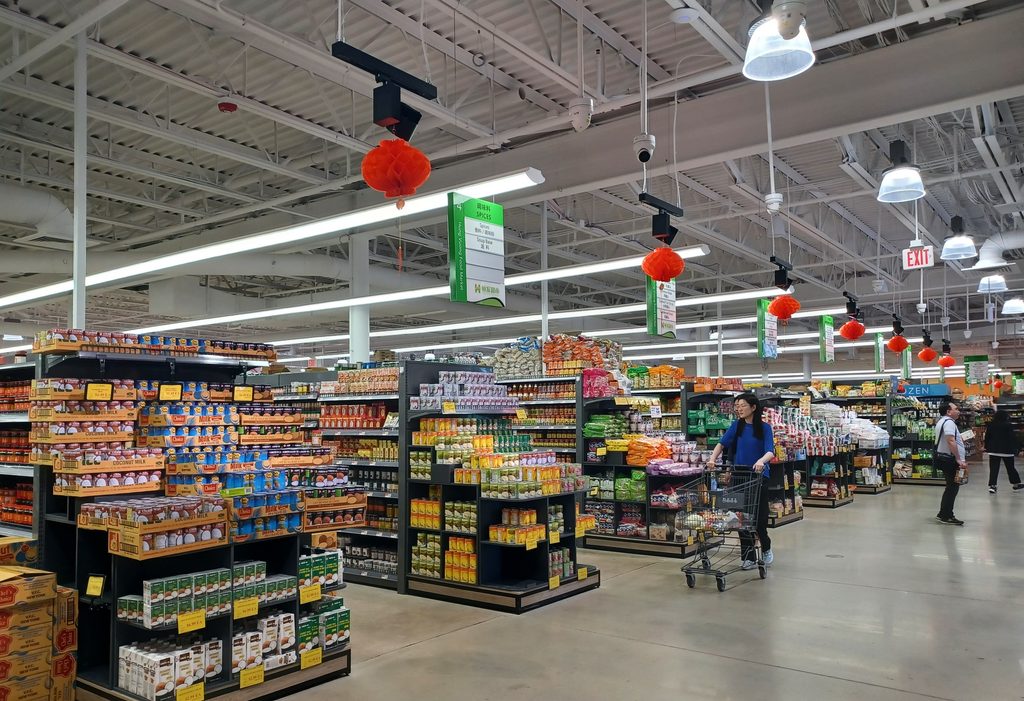
A typical Asian megastore displays upwards of 350 fresh produce items, ranging from dozens of varieties of leafy greens (bok choy, gai lan, hollow heart greens) to exotic fruits (durian, lychee, dragonfruit) and fresh root vegetables. Paired with entire aisles dedicated solely to soy sauces, chili pastes (gochujang, sriracha), fermented misos, and imported noodles, the selection attracts both heritage shoppers and a growing demographic of non-Asian culinary enthusiasts.
Cultural Recognition: The FDR Park Phenomenon
The mainstreaming of Asian food culture in Philadelphia extends beyond brick-and-mortar supermarkets into public spaces.
The Southeast Asian Market at FDR Park which began decades ago as an informal gathering of Cambodian and Lao refugee vendors has earned national acclaim as a premier culinary destination. Recognized by the Fairmount Park Conservancy as “a hub of cultural diversity,” the market gained formal city authorization and vendor representation through The Vendors Association of FDR Park, securing a permanent home within the park long-term master plan.
The Road Ahead
As Asian grocers expand their presence throughout Bucks, Montgomery, Chester, and Camden counties, their business model offers a compelling case study for the future of brick-and-mortar retail. By combining specialized fresh perishables, culinary experiences, and deep community ties, the Asian food market in Greater Philadelphia has moved far beyond a niche trend securing its place as a cornerstone of the regional economy.